
How to choose a cat scratching post: size, stability and 4 models
A practical guide to observing your cat, measuring the available space, checking stability and comparing four distinct scratching-post designs.
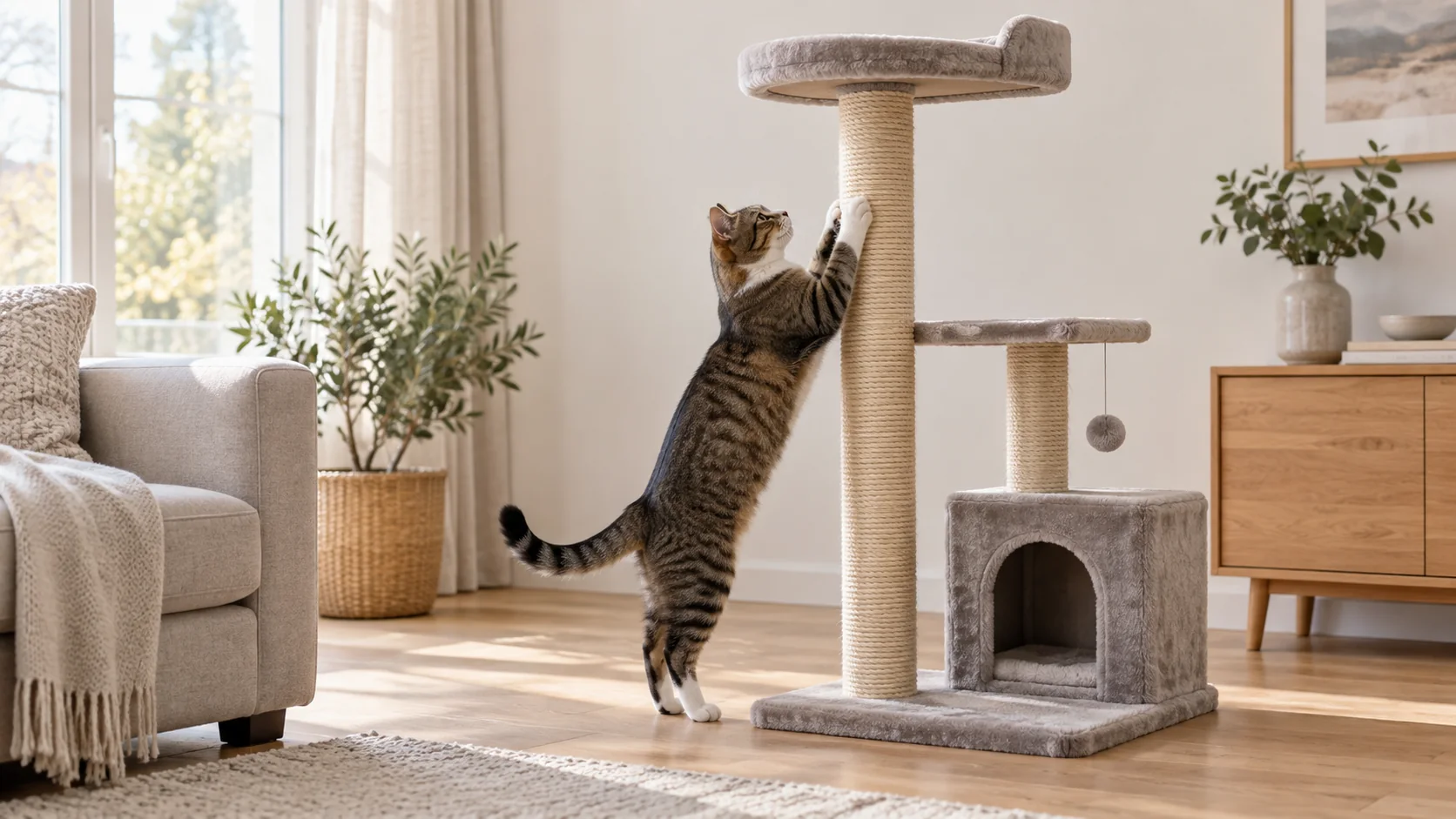
A good cat scratching post has to suit more than the room's colour scheme. Your cat should be able to stretch comfortably, reach the platforms safely and choose a suitable resting spot, while the structure should remain steady and clear of walkways. Before buying, compare the footprint, usable scratching areas, platform sizes and fixing method as well as the overall height. This guide evaluates four different designs from the Bonideco cat scratching post range in practical home situations.
Quick guide: a 71 cm post with a bed may be enough for one cat and a small room; a medium-height tree offers more varied climbing and resting places; a 231–291 cm tension-mounted tree uses little floor space but needs a suitable ceiling; several cats need separate resting and scratching spots and a more substantial structure.
Cat scratching posts: four different designs compared
We selected four FEANDREA designs for different needs: a compact post, a medium-height climbing tree, a floor-to-ceiling tension model and a heavier tree for several cats. Dimensions, weight and included features were checked against the Bonideco catalogue and manufacturer information on 17 September 2026. This is a comparison of stated specifications rather than a hands-on test. Current prices and availability appear in the product cards.
| Model | Size and weight | Design | Best suited to |
|---|---|---|---|
| FEANDREA PCA022G01 | 45 × 40 × 71 cm; 4.5 kg | One sisal post, a wide bed and a hanging toy | One cat that needs a compact scratching and resting place |
| FEANDREA PCT161G01 | 55 × 45 × 143 cm; 13 kg | Cave, hammock, top perch and several sisal posts | General climbing and resting without a very large footprint |
| FEANDREA PCT210G01 | 45 × 30 × 231–291 cm; 13 kg | Slim floor-to-ceiling tension tree with platforms, cave and bed | A height-loving cat, limited floor space and a suitable ceiling |
| FEANDREA PCT019G01 | 54 × 50 × 168 cm; 21 kg | 3 perches, 2 caves, a basket, board and sisal posts | Up to 3 cats, each weighing less than 7 kg |
Keep in mind: total height does not reveal the length of an uninterrupted scratching surface. Check the distance between platforms, the length of each sisal section and the bed dimensions in the product information. Large cats and cats with limited mobility also need a comfortable route between levels.
How do you choose a scratching post for your cat and room?
Observe how your cat scratches and rests
Some cats scratch upright on their hind legs, while others prefer a horizontal board or mat. Estimate how high your cat reaches when fully stretched and look for a long, unobstructed scratching area. Short sisal sections between platforms help during climbing, but they may not replace a tall post for a cat that likes to extend its entire body.
Resting habits matter too. An open perch suits a cat that watches the room, a cave gives a more enclosed retreat, and a hammock or raised-edge bed supports a curled sleeping position. If your cat consistently ignores enclosed beds, extra caves may increase the size of the tree without adding useful space.
Mark the footprint and allow for overhanging parts
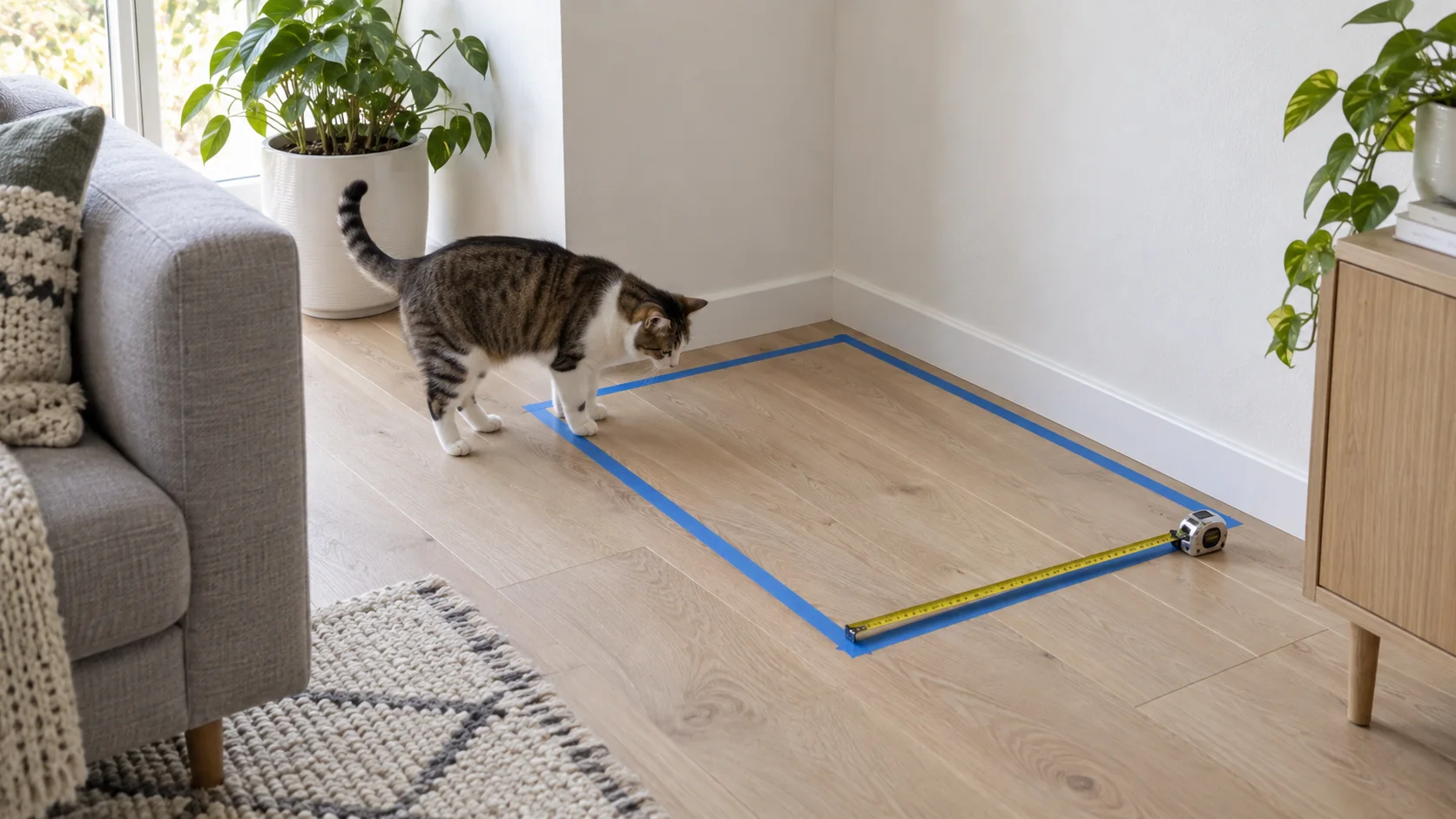
Use removable painter's tape to mark the model's base width and depth on the floor. Check doors, cabinets, curtains, radiators and a robot vacuum's route. Perches, hammocks and ladders may extend beyond the base, so the base dimensions alone do not always show the entire occupied area. Compare your outline with the product photos and the assembled dimensions.
If the tree will stand by a window, leave a safe distance from opening sections, blind cords and objects that are easy to knock over. The scratching post should not become an unintended step towards an unsafe area.
For several cats, count separate usable places
A multi-level tree can save floor space, but height is only one part of sharing. Check whether the cats can pass each other, whether there is more than one desirable resting place and whether a cat higher up could block the only route down. PCT019G01 is described as suitable for up to three cats weighing less than 7 kg each, but actual suitability also depends on their size, mobility and relationship.
Which cat scratching post fits your situation?
A compact post with a bed: FEANDREA PCA022G01
This 71 cm model occupies 45 × 40 cm of floor. It combines a wide sisal post with a raised-edge bed and hanging toy. The 4.5 kg structure has a broad base and four non-slip pads, and the platform cover can be removed for cleaning. It is a straightforward choice for one cat when a multi-level climbing area is unnecessary.
Check whether the overall 71 cm height and the actual sisal section let your cat stretch fully. One platform may not be enough for an active or multi-cat household. Place this lighter post on an even, non-slip surface and watch whether it shifts during energetic scratching.
A versatile medium-height tree: FEANDREA PCT161G01
The 143 cm structure has a cave, hammock, padded top perch and several scratching posts. Its 55 × 45 cm base needs more space than a simple post, but it creates different levels for climbing and rest. The tree weighs 13 kg and includes an anti-tip device.
This is a balanced option for one active cat or two cats that share space calmly. If your cat is large, check the cave, hammock and top-bed measurements in the product information. Install the anti-tip device as instructed and use fixings appropriate for the wall material.
A slim floor-to-ceiling tree: FEANDREA PCT210G01
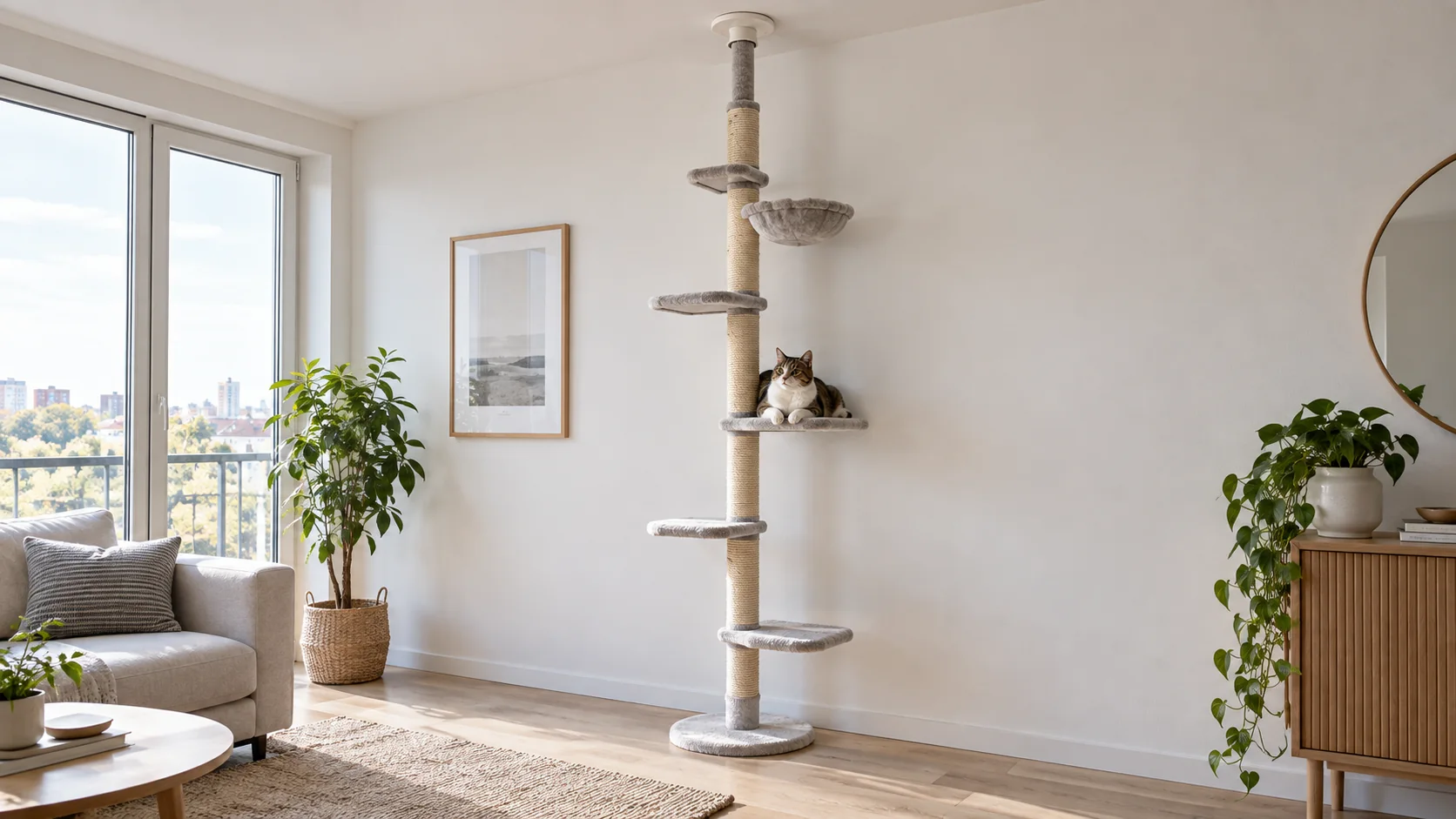
PCT210G01 has a 45 × 30 cm base and adjusts from 231 to 291 cm in height. Its vertical layout offers several observation points without taking up a wide area of floor. The model presses between floor and ceiling, so measure the ceiling precisely at the intended installation point before ordering.
This type is unsuitable for sloped, fragile or otherwise unsupported ceilings. Check for suspended ceiling panels or decorative finishes that pressure could damage. Assemble and tension the support exactly as instructed, then inspect it periodically to make sure it has not loosened.
More resting places for several cats: FEANDREA PCT019G01
This 168 cm, 21 kg tree includes three padded perches, two caves, a basket, a large scratching board and sisal-wrapped posts. The 54 × 50 cm base is fairly compact for its capacity, although the upper parts create a wider usable area. The manufacturer describes it as suitable for up to three cats weighing less than 7 kg each.
The extra features help only when their dimensions suit your cats. Check cave openings, perch width and the route between levels. Use the supplied anti-tip fitting according to the instructions. If the cats compete for the highest perch, a separate resting point elsewhere in the room may work better than another feature on the same tree.
Where should a scratching post stand, and how do you check stability?
The base, wall and safe clearance
Put the tree on a level surface where your cat already spends time: near a resting area, a useful viewpoint or furniture it tries to scratch. A tree hidden in an unused corner may attract less interest. Leave room for safe jumping and descending, and keep doors and walkways clear.
Anchor a tall tree to the wall when the manufacturer provides for it. Identify the wall material and the position of concealed pipes or cables. After assembly, move the structure gently in several directions: the base should stay put, joints should not wobble and platforms should not rotate. Recheck fasteners periodically, especially after moving the tree.
What needs checking on a tension-mounted tree?
Measure the ceiling at several points within the chosen spot because floors and ceilings may not be perfectly level. Make sure the adjustment range includes the actual height and leaves enough travel to apply the specified tension. The top pad should contact a solid, flat ceiling surface across its full area.
Recheck the tension and joints after the first few days of use. If the tree moves, the ceiling surface deforms or the parts do not match the instructions, stop access until the issue is resolved. Weight and height alone do not guarantee stability; correct assembly, the supporting surfaces and the fixing method all matter.
Eight checks before buying a cat scratching post
- Record your cat's size and weight. Compare them with perch and cave dimensions and the stated load limits.
- Observe scratching direction. Upright stretching needs a long post; horizontal scratching calls for a board or mat.
- Mark the complete area. Include hammocks, perches or ladders that project beyond the base.
- Check the route. Your cat should climb and descend without colliding with furniture, curtains or another cat.
- Match the resting places. A bed, cave or hammock must suit your cat's habits and body size.
- Plan the fixing. Check the wall for a tall tree and the height, surface and structure of the ceiling for a tension model.
- Plan cleaning. Find out which cushions or covers are removable and how plush and sisal should be maintained.
- Read the selected variant's page. Colours may use a different SKU, set of features or measurements; confirm the live price and delivery terms before ordering.
Once these checks are complete, browse all Bonideco cat scratching posts and filter by the dimensions that actually fit. Choose colour and style among the structures that suit the room and your cat's habits.
Frequently asked questions about cat scratching posts
How tall should a scratching post be for an adult cat?
The length of the unobstructed scratching section matters more than the tree's total height. Observe how high your cat reaches when fully stretched and compare that with the sisal area. Platforms can divide a tall model into much shorter scratching sections.
Is a tall cat tree always more stable than a short one?
No. Stability depends on the base size and weight, weight distribution, joints, flooring and wall or ceiling fixing. Assemble and secure a tall structure exactly as instructed for that model.
What should I check for a large cat?
Look beyond the total load rating. Check perch width and depth, cave openings, post diameter, base stability and the distance between levels. Your cat should be able to turn and lie down without hanging over an edge.
Is one cat tree enough for several cats?
It depends on the cats and the structure. Several scratching surfaces, more than one desirable bed and alternative movement routes all help. If one cat blocks access, provide another scratching place elsewhere in the room.
How can I encourage my cat to use a new scratching post?
Place it where your cat already scratches or rests and allow exploration at its own pace. Direct play near the scratching surface or place a familiar-smelling cloth on a bed. Do not force the cat's paws onto the post. Remove a hanging toy if it becomes damaged or the cat chews it.